STEREOLAB + MOMBOJO – CORN EXCHANGE, BRIGHTON 5.12.25
Formed in a saturated 1990s scene, Stereolab are anomalous. Emerging alongside acts like The Cranberries, they never matched their mainstream success – instead remaining cult favourites, an art school staple still awaiting the recognition they deserve. Tonight, they arrive at Brighton Dome’s Corn Exchange – a city where cult favourites are stars – for their third show here in 6 years.
Stereolab are their own esoterica, like switching through radio stations so fast they blur into one. Among these stations flicker the infectious groove of The Isley Brothers, KrautRock’s rigid time signatures, and the askew dance of Eno-era Talking Heads. They fall somewhere close to a band for people still drunk the morning after, shifting between French and English lyrics with the aplomb of a multicultural lounge act. It’s easy to see why they never broke into the mainstream when they’ve never tried to appeal to anything beyond their instincts, carving a path for a litany of acts to follow.
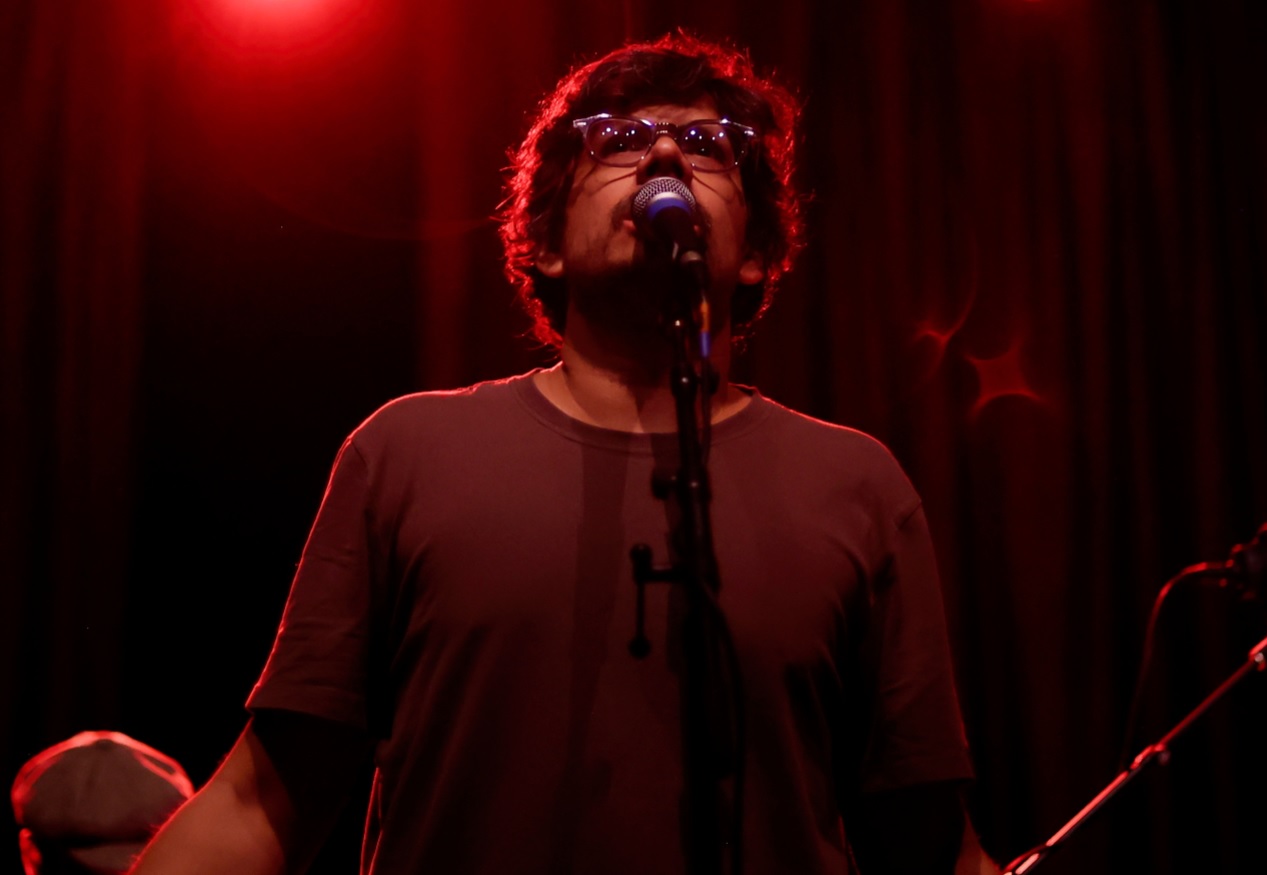
First up tonight is Mombojó – making their UK debut, the Brazilian quintet blends elements of traditional manguebeat with indie rock sensibilities. Their commitment to bringing their own cultural blend to the mainstream echoes Super Furry Animals psych-pop ethos – a fitting prelude to Stereolab’s world.
Five members arrive on a stage to traditional samba, in a room more used to literature talks than regional manguebeat.
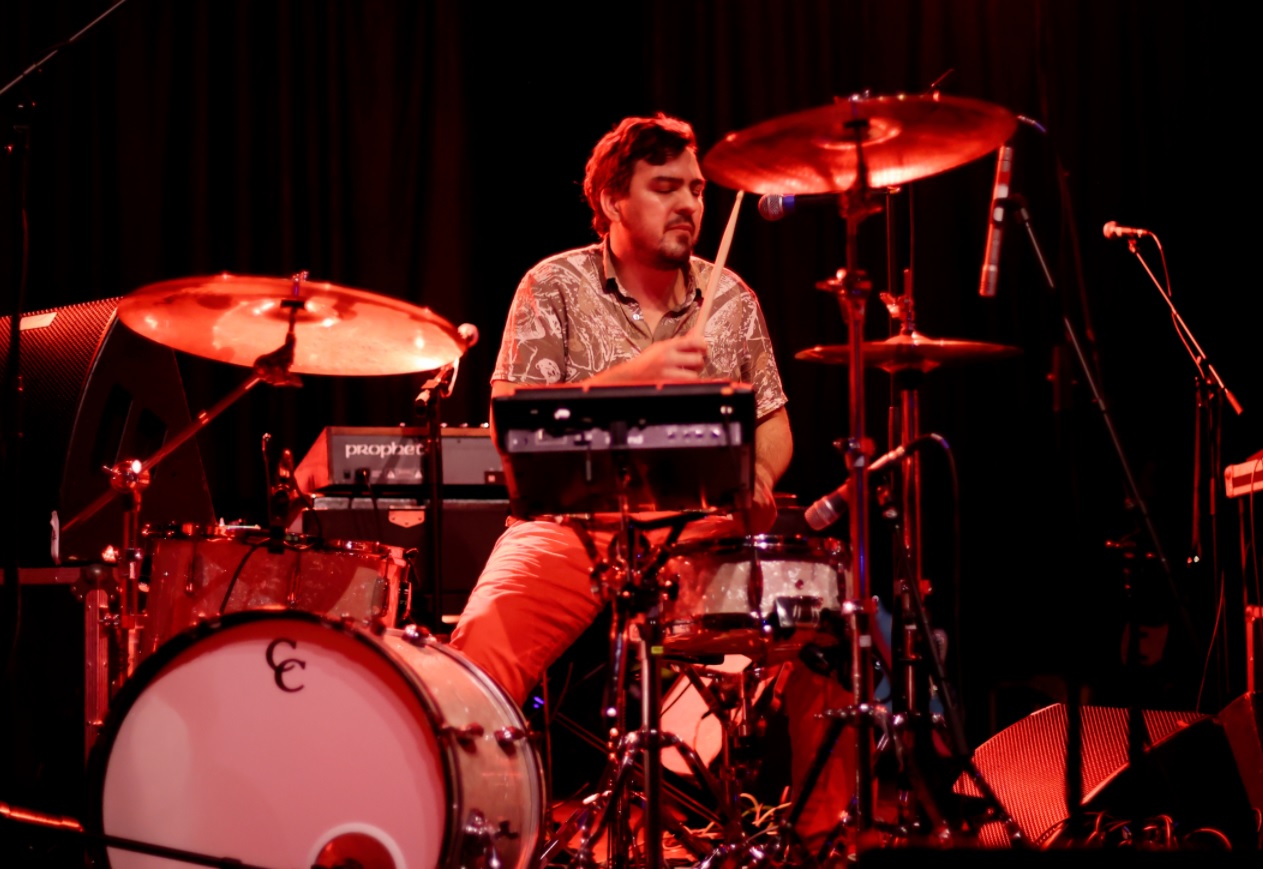
Throughout their all-Portuguese set, one thing is apparent: fun is their focus. In a snappy 35-minute set, they focus on making their debut memorable – sounding like a holiday bar band from the opening notes of breezy, psych-samba classic ‘Absorva.’ Mombojó utilize everything available: even a melodica appears on multiple tracks. Inevitably, they track closely to Stereolab, between countrymen Astrud Gilberto and Suba.

However, in their final three tracks, guitarist André Édipo adds an extra layer to the sound – steering away from the breezy lounge samba, they border on genuine rock for tracks ‘Deixe Se Acreditar’ and ‘A Missa.’ Unfortunately, in spite of trying, they cannot get the audience to sing along or dance – even after multiple attempts to clap along or sing the nationless phonetics of “Ba da da da,” Mombojó never truly win over an audience as restless as this one. While close in sound to tonight’s headliner, and clearly grateful, they can’t match anticipation for a band beloved by the growing audience.
As the audience slip away to grab a final pint, excitement builds for Stereolab’s experiments to test the seemingly perfect acoustics.
Mombojó setlist:
‘Absorva’
‘O Céu, O Sol e o Mar’
‘Swinga’
‘Sino de Ouro’
‘Papapa’
‘Deixe-se Acreditar’
‘A Missa’
A sea of grey hair and beanies adorn the school hall of Corn Exchange – an upside-down boat humming with quiet anticipation for Stereolab to begin.
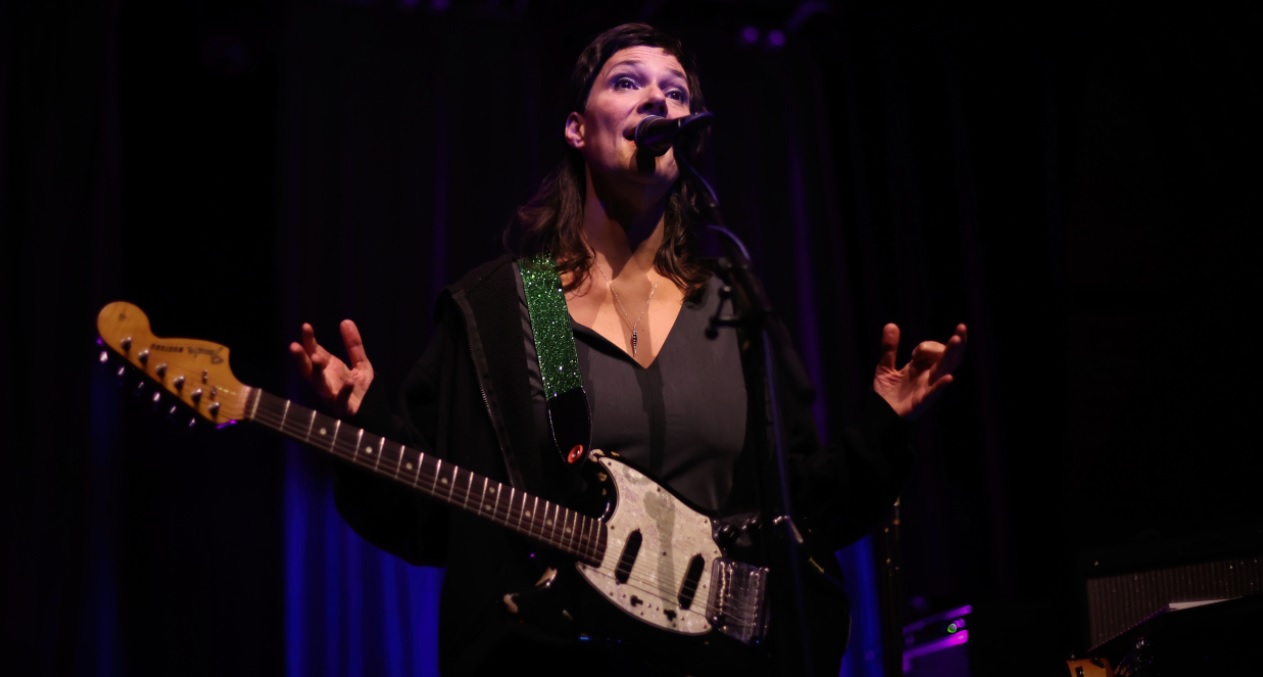
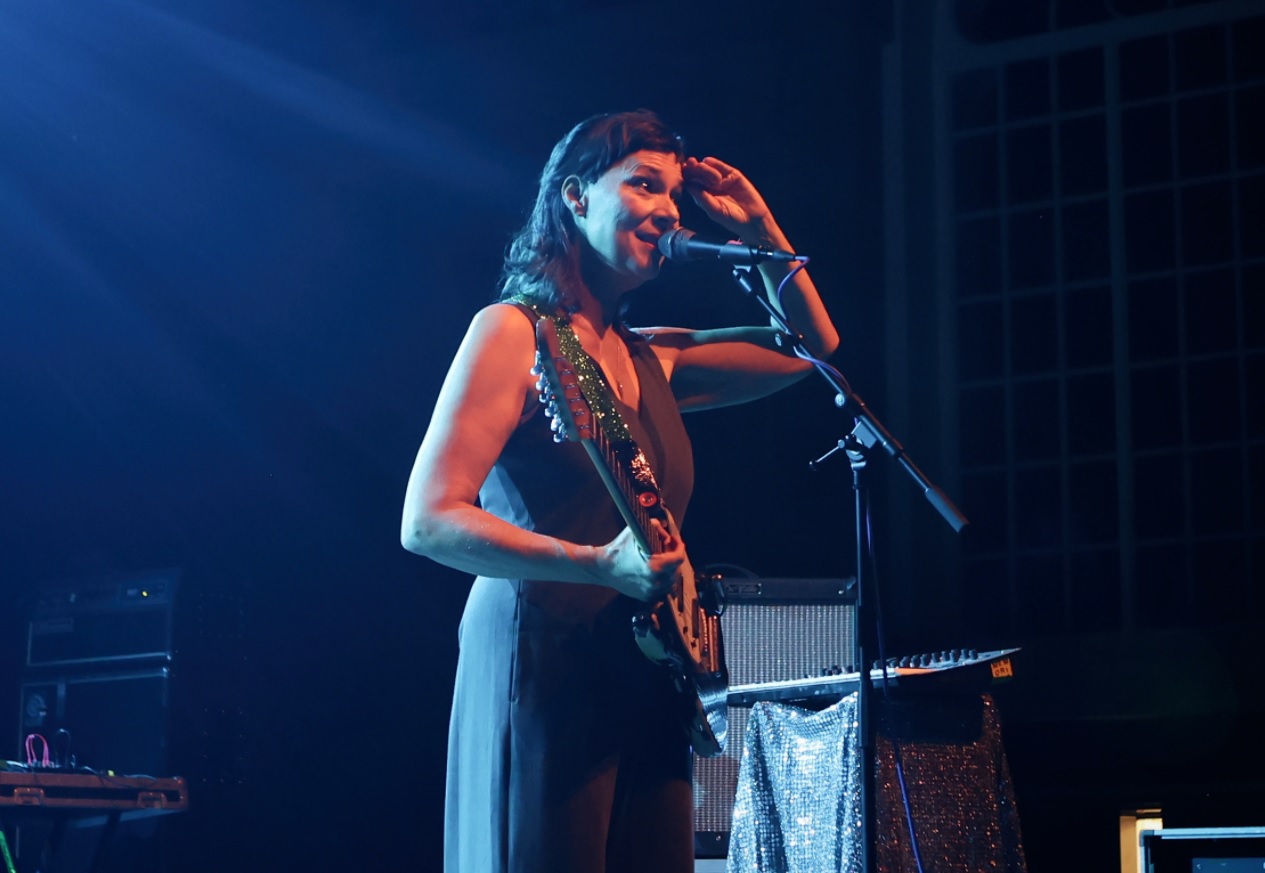
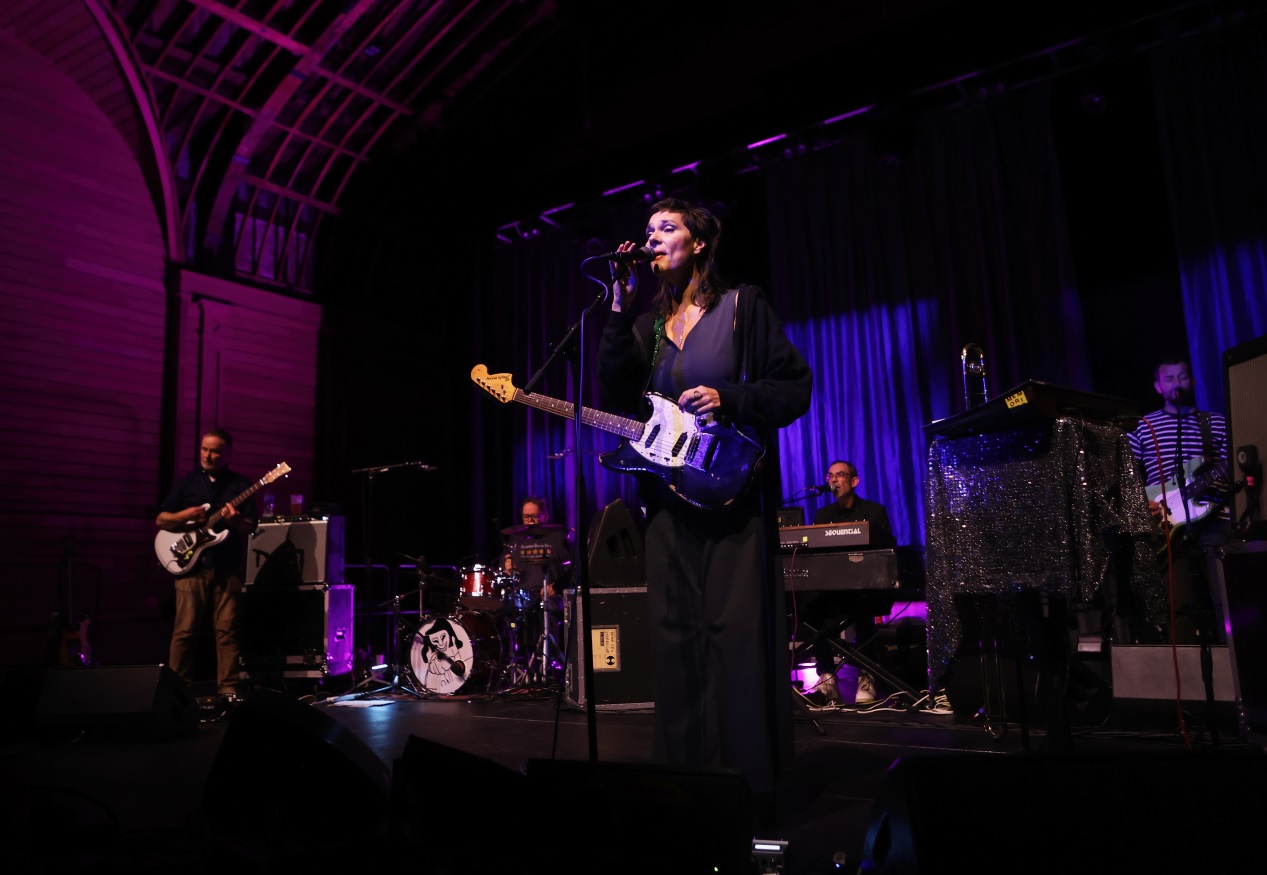
The darting synths of ‘Mystical Plosives’ ricochet around the room, announcing themselves before bleeding into the first true track, ‘Aerial Troubles.’ It’s a loop of hypnotic repetition, offset by sinister lyrics and bookended by the same synths. “Thank you, good evening” from frontwoman Lætitia Sadier is met with “I love you” from a hall that is practically bursting at the sides.
“Yes, that’s what it’s all about. Love” before ‘Motoroller Scalatron’ is aired – a propulsive track textured with rhythmic guitars and cyclical structures. Between songs, Sadier chats with the audience – creating a casual back-and-forth. She introduces ‘Vermona F Transistor’ as a song about “the gods, and the narratives we believe in and think are true”, only interrupting herself to save multi-instrumentalist Tim Gane’s pint.
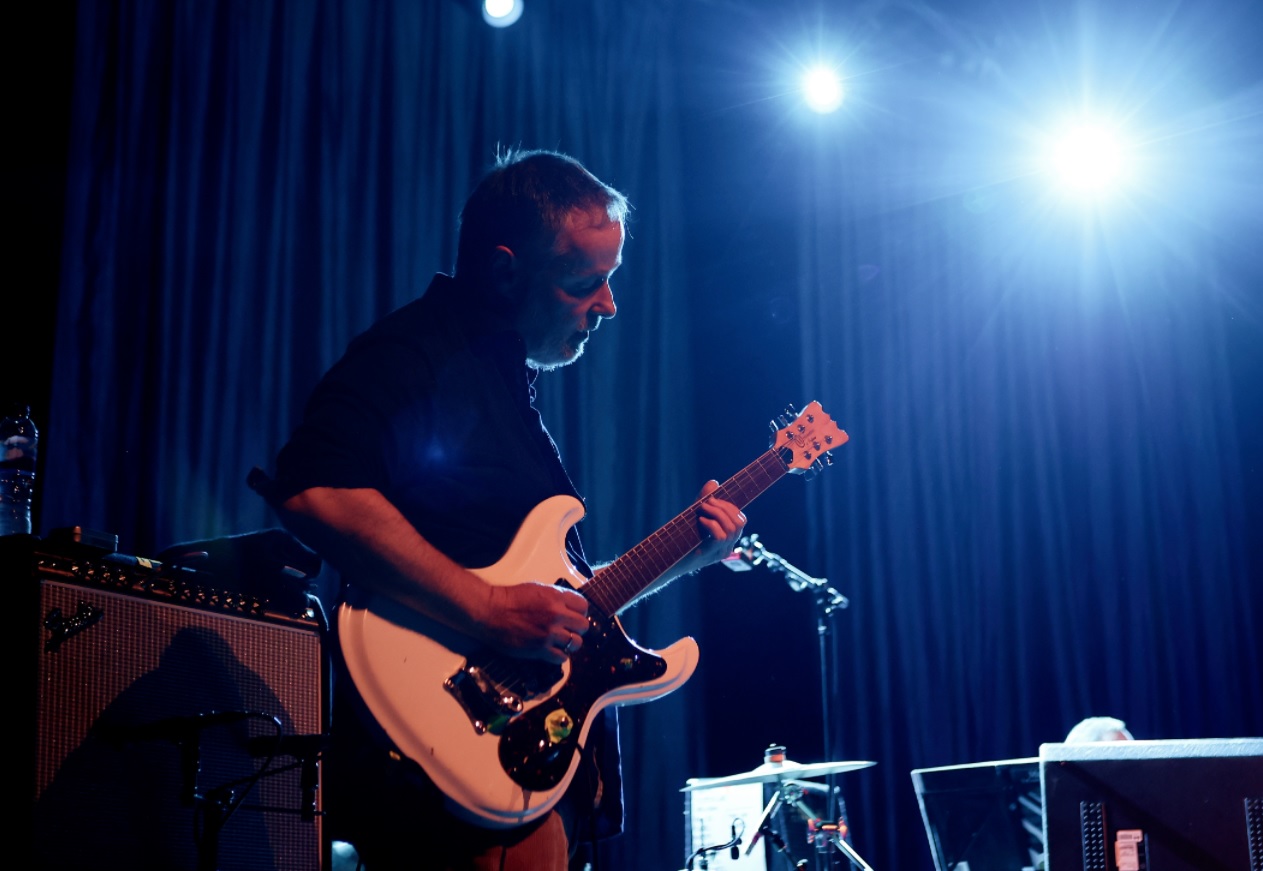
At first ‘Peng!33’ appears as uniform as its predecessor, but it reveals Stereolab as more than a retrofuturistic one trick pony. The track creeps close to garage rock, softened slightly behind a wall of synth – somewhere between the Lo-Fi gauze of The Velvet Underground and Sonic Youth. Follower ‘Flower Called Nowhere’ forms an almighty duo, with spacey repetition disguising alienation beneath lounge simplicity.
If the prior tracks encompass Stereolab in two, follower ‘Melodie Is A Wound’ – introduced as “Capitalism Is a Wound” – is an epic, capturing their dreamy absurdity. Across its mammoth runtime, it builds like house music with each loop adding complexity. It’s David Lynch’s approach to elevator music – a soaring, surreal distillation of what they do best. Sadier shows her range on the three instruments she’s been equipped with tonight, at times a one-woman-band appearing as if she’s been thrown backwards through GAK.
“You’re not very vocal Brighton, You’re supposed to be Groovy” Sadier chides, even after their prior epic cuts off audience applause to continue. It’s met with sparse shouts of “F*ck Nigel Farage” in typical Brighton fashion.
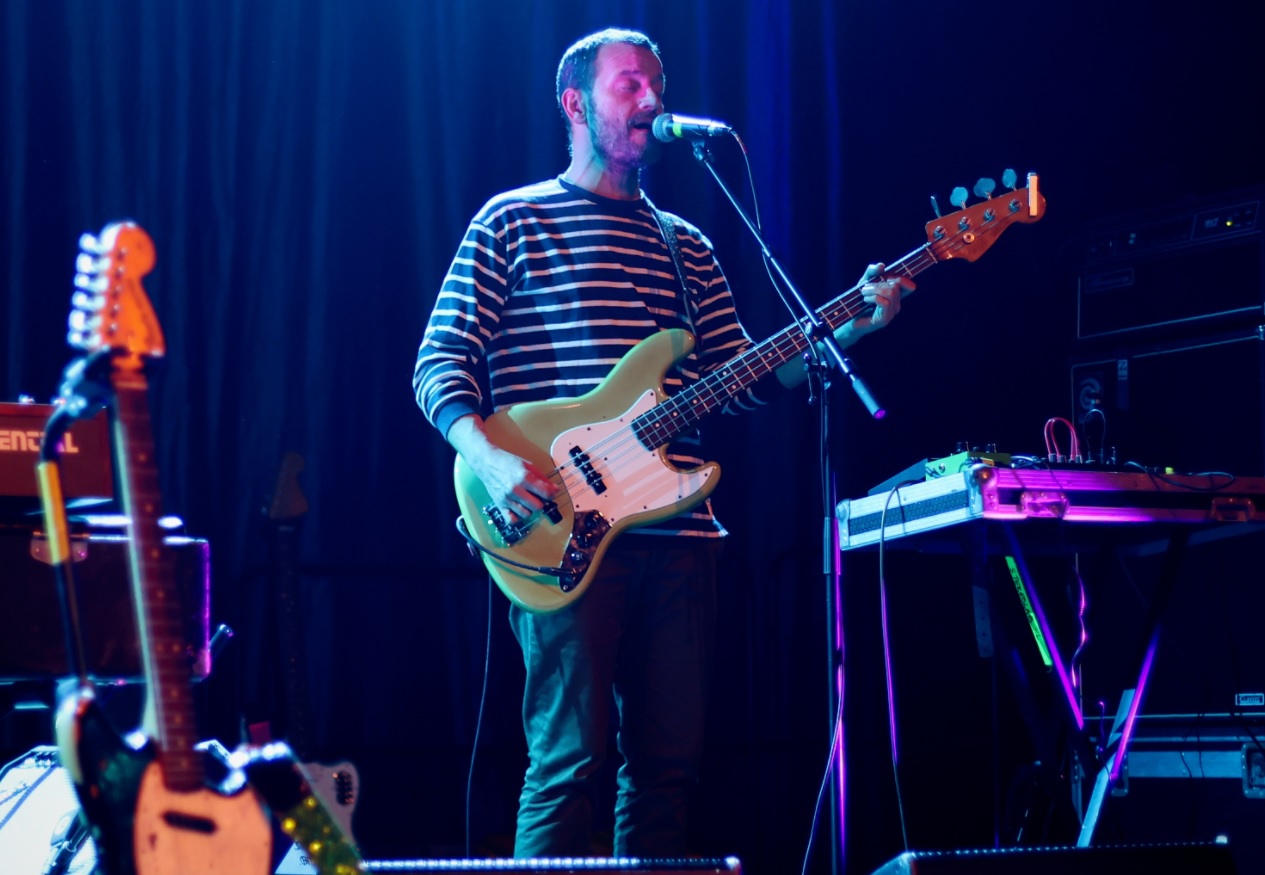
The two parter ‘If You Remember I Forget How To Dream’ is another epic, unfolding into hazy dreamscapes underpinned by motorik beats and delivered by Sadier with Nico-indebted vocals. Whilst precisely organised, the spirit of improvisation remains – it feels like watching a well-rehearsed outfit inventing on the spot.
“We love this one!” someone shouts as ‘Miss Modular’ is unleashed. The 1997 cut fuses propulsive groove with guitars as close to lounge as 70s funk; creating an anachronistic sonic texture that earns the loudest response yet. Follower ‘Household Names’ follows a similar template, an askew synth groove with surreal lyrics of recognition.
Recent album cut ‘Esemplastic Creeping Eruption’ shadows earlier moments (‘Peng!33’); its Postal Service-Via-Samba moves through several reference points without ever sounding jumbled. Live, it’s translated near perfectly with slightly scuzzier guitars to boot. Its closing swirl of synths meets audience shouts of ‘French Disco’ – Sadier retorts “Are you crazy? It’s techno… No one told me it’s karaoke.’”
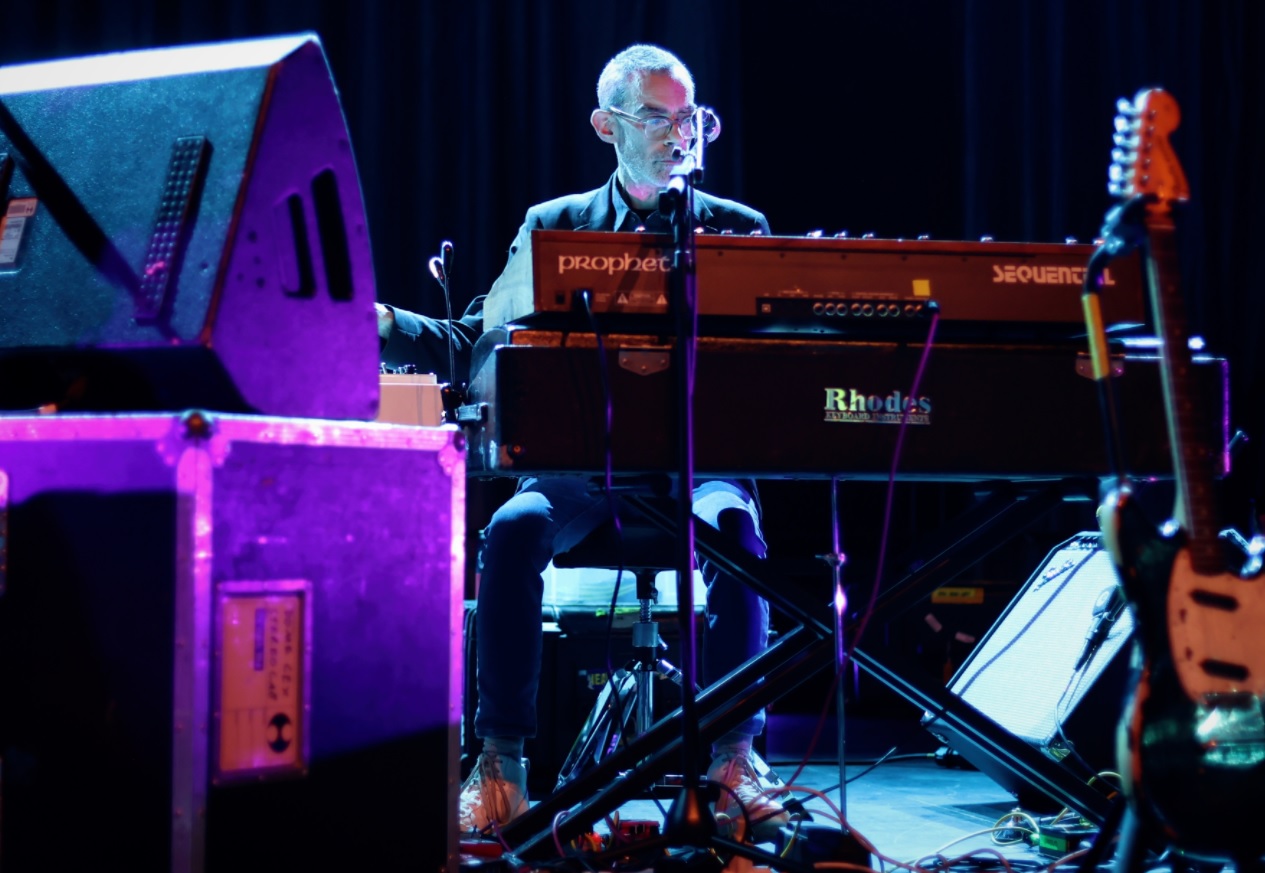
Introduced as a song about “being fearful and getting over it,” ‘Percolator’ hits like Daft Punk remixing The Doors, its electronic pulse spurring its vintage sensibilities. This creates momentum for closer ‘Electrified Teenybopper’ to breathe. The finale is pure instrumental, built on old school synth meeting 80s mersey jangle guitar, fit for the ‘Tron’ soundtrack as ephemeral as it is timeless.
An abrupt exit builds suspense: the lights stay low as whoops, claps and stomps demand more from the band. A summons they’re happy to obey as Stereolab arrive back on stage for a rare encore.
“I wish the barrier was maybe three metres closer,” a humbled Sadier announces. “It’s our first time here. The inside of here looks like a boat.”

‘Immortal Hands’ opens the final act with more of the same – warm synths carry a melodic track concluding in another trombone solo from our versatile frontwoman.
“OK name that tune” introduces ‘Cybele’s Reverie’ – a gorgeously textured track built on choppy violins and overlapping vocals, layering pop melodies with propulsive Krautrock drums urgently driving to conclusion. Its lyrics cover childhood nostalgia in French – a four-minute sonic evolution, ending tonight on a literal high note from Sadier.
At home in their sound, Stereolab impress tonight. While playing to a crowd of mostly longtime fans, the rooms keep growing. Stereolab embody musical Kaizen: small repetitions creating something greater than the sum of its parts. Forever a cult band, Stereolab’s set leans heavily on recent release ‘Instant Holograms On Metal Film,’ reinforcing the band’s forward-facing approach. Ephemeral yet timeless, they exist in multiple eras at once; as comfortable in a 60s casino or an 80s club show as a hall in Brighton in 2025, their cult just keeps growing.
Stereolab setlist:
‘Mystical Plosives’
‘Aerial Troubles’
‘Motoroller Scalatron’
‘Vermona F Transistor’
‘Peng!33’
‘Flower Called Nowhere’
‘Melodie Is A Wound’
‘If You Remember I Forget How To Dream pt.1’
‘If You Remember I Forget How To Dream pt.2’
‘Miss Modular’
‘Household Names’
‘Esemplastic Creeping Eruption’
‘Percolator’
‘Electrified Teenybop’
‘Immortal Hands’
‘Cybele’s Reverie’