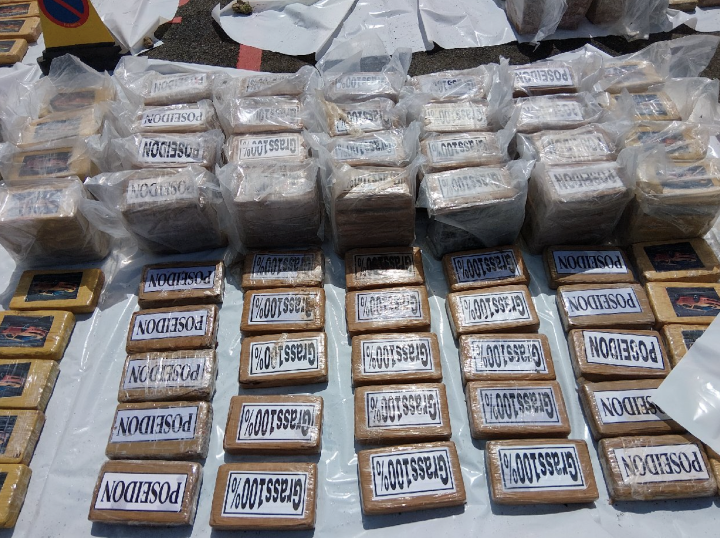
Five men were jailed for a total of 58 years today (Friday 23 October) for importing almost half a ton of cocaine worth £34 million in a fishing boat earlier this year.
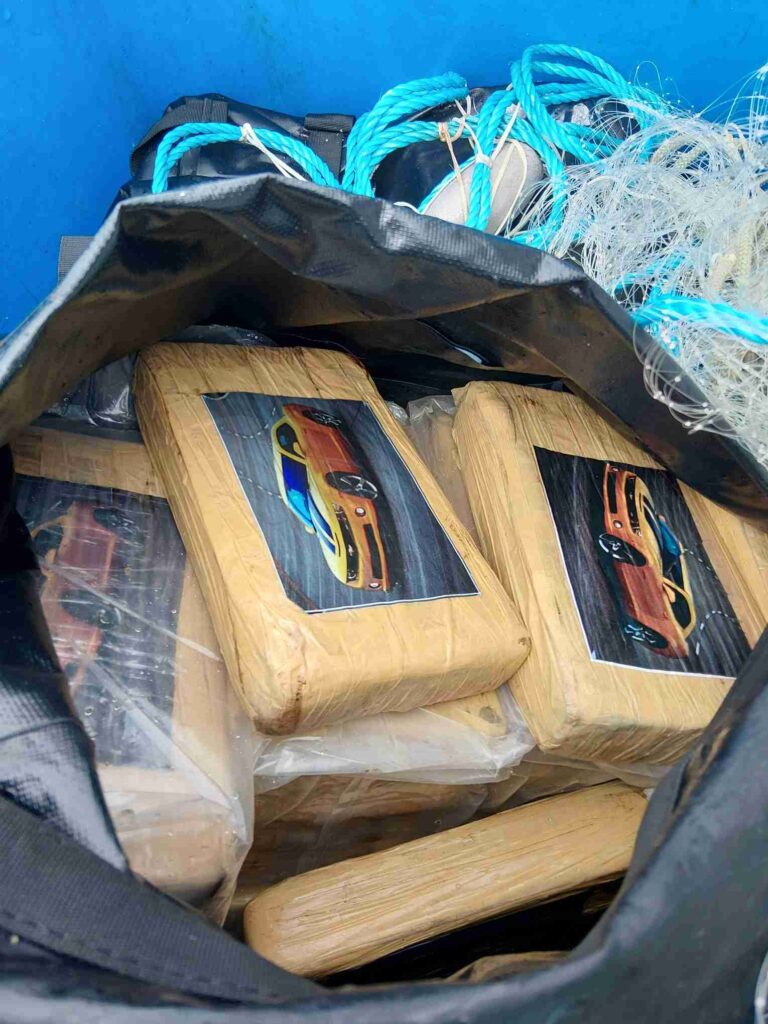
Four of the men collected watertight packets of the drug at sea before bringing them ashore at Sovereign Harbour, also known as Eastbourne Marina, where National Crime Agency officers caught them red-handed.
The fifth man was arrested at a nearby petrol station in a hired van in a swoop that “marked the culmination of an intelligence-led surveillance operation” by the NCA, Hove Crown Court was told.
All five pleaded guilty to smuggling 937lb (425kg) of cocaine into the country with a wholesale value of more than £9 million and a street value of £34 million.
Hugh French, prosecuting, told the court: “The bricks of cocaine had been picked up by participants in this conspiracy following an ‘at-sea drop-off’.”
The wrapped packets of cocaine would have been dropped into the sea, probably from a ship, with a transponder – or GPS tracker – to enable them to be retrieved.
Mr French said that they were retrieved by the smugglers in a fishing boat, New Horizon, before being brought ashore at the East Sussex harbour on Monday 8 June.
Two of the five smugglers were former soldiers who had served in Bosnia and Afghanistan while two were fishermen and one was a drug addict trying to pay off his debts.
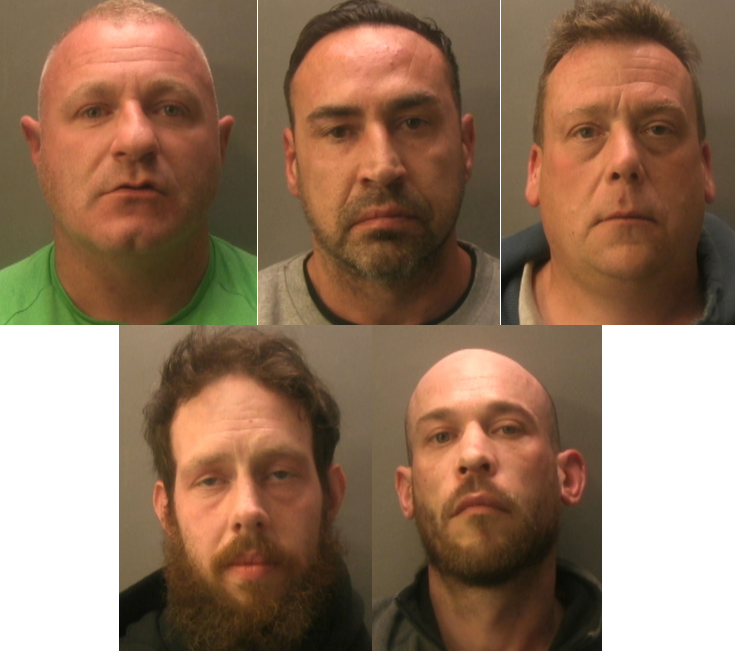
The five men are
- Alan John Colquhoun, 49, of Oberon, Alloa, Clackmannanshire, who was jailed for 16 years
- William Donohoe, 38, of Sycamore Drive, Craigneuk, Airdrie, who was jailed for 16 years
- Ian Smith, 50, of New College Close, Eastbourne, who was jailed for 12 years
- Jacob Cronin, 32, of Elgar Way, Eastbourne, who was jailed for 6 years and 8 months
- Daniel Ruffell, 36, of Humber Way, Slough, Berkshire, who was jailed for 8 years
Judge Jeremy Gold said that they had taken part in “a sophisticated operation to smuggle drugs into the United Kingdom”.
Hugh French, prosecuting, told the court that Colquhoun and Donohoe, both military veterans, had travelled from Scotland to Sussex in advance to find the best place to land their haul. They expected to receive £40,000 each.
They took on Smith, who skippered the New Horizon, and Cronin, a fellow fisherman who were struggling financially.
When the men were arrested, Mr French said: “Ruffell was located hiding within a cupboard onboard the New Horizon vessel.”
He told the court that the sentencing guidelines treated a haul of 5kg or more as being in the highest category for “harm”.
Judge Gold said that the 425kg haul was “off the scale” and would justify a higher starting point when deciding the length of the men’s prison sentences.
He said: “All five of you have progressed well since being remanded in custody and are clearly doing your best to behave impeccably and make a positive contribution to prison life in your current situation.
“However, as I am sure you all understand, involving yourselves in the importation of cocaine affords me very little flexibility in the sentences that I am obliged to impose.
“Each of you is entitled to a one third reduction in the appropriate sentence to reflect your guilty pleas which I accept were entered at the first available opportunity.”
Mr French said that Colquhoun and Donohoe had leading roles. The court was told that they called themselves Navigate and Bruce Wayne, the latter being the name of comic book superhero Batman.
Rebecca Upton, defending Colquhoun, said that for the risk that he and Donohoe took, the reward was to have been fairly modest and that others had the real leading roles.
Colquhoun, she said, “was logistically co-ordinating what was happening” but not directing or organising, buying or selling on a commercial scale.
As a result of his arrest in June, Colquhuon, a father of two, had missed his wedding which had been due to take place in July.
Miss Upton said that he had served with the Army in Bosnia and added: “The struggles that he has had, arising from his service to British military, are not going to go away.”
He and Donohoe had received help as part of Operation Nova which was set up to support military veterans in prison.
Daniel Frier, defending Donohoe, said that he was “clearly taking detailed and specific instructions from people upstream” and had been told what to buy and where to stay during the preparatory stage.
Mr Frier said: “There is no evidence of them (Donohoe and Colquhoun) giving instructions to any of the others (and) they are only provided with information when they need to know it.
“They weren’t told beforehand what to do when they landed (the haul). They were told to take it to a padel court car park. Mr Donohoe was a hired hand.”
Donohoe saw active service in Afghanistan, Mr Frier said, and a character reference spoke of his “courage and bravery on the battlefield”.
The barrister added: “Those experiences overseas have had substantial effects on him.”
He had post-traumatic stress disorder, he had turned to drink and he struggled to find work.
Mr Frier said: “He deeply regrets his involvement in this enterprise … something which was deeply out of character.”
William England, defending Smith, said that he was a father and grandfather who had worked as a self-employed skipper and fisherman and found himself in debt.
Mr England said that Smith had made “a foolish mistake”, according to one character reference, and the drug-smuggling venture “did not reflect than man I know”.
The barrister added that, when Smith’s debts became too much, “out of sheer desperation, he made a decision that he will regret for the rest of his life”.
Andrew Stephens, defending Cronin, also a fisherman, said: “He did a shift as a deck hand. He didn’t know what he was getting into – not the quantity (and) not the scale.
“He would have got his normal shift pay for doing it. He was a hired help for a few hours.”
Benjamin Brown, for Ruffell, who was also a father, said that he acted as a lookout, adding: “His expectation of financial gain was limited to paying off his debts arising from his lengthy and sustained addiction to class A drugs – heroin and cocaine.”
Mr Brown said: “He feared for his safety should he refuse the opportunity … He was the victim of a mistaken identity machete attack some years ago.”
Ruffell had suffered continuing back pain since the attack, Mr Brown said, and from an early age he had been exposed to extensive domestic alcohol and drug misuse.
The barrister added: “My client knows that he faces a lengthy sentence. I would invite your honour to impose the most lenient sentence that is commensurate with justice.”
Judge Gold told Colquhoun and Donohoe: “Had you contested the case, the sentence on each of you would have been 24 years’ imprisonment. I reduce that to 16 years to reflect your guilty pleas at the first available opportunity.”
The judge told Smith: “You were the captain of the fishing vessel used to collect the drugs from the sea and you would have had some awareness and understanding of the scale of the operation.
“I accept that you had a significant role in this enterprise. The sentence in your case would have been 18 years which I reduce to 12 years to reflect your guilty plea.
He told Cronin: “You were the least involved in this enterprise and the prosecution accept that you had a lesser role within the guidelines.
“You were involved in preparing the fishing vessel and are described as ‘a pair of hands’ in the operation.
“You are a fisherman by trade and became involved due to financial hardship and you have no previous convictions.
“The sentence in your case would have been 10 years’ imprisonment which I reduce to 6 years and 8 months to reflect your guilty plea.”
Judge Gold told Ruffell: “In my judgment, your participation should be regarded as being at the lower end of a significant role.
“You were effectively present to assist in the recovery of the drugs from the sea and to ensure the safe passage of the drugs thereafter.
“The appropriate sentence in your case would have been one of 12 years which I reduce to 8 years to reflect your guilty plea.”

NCA senior investigating officer Carl Barrass said: “Colquhoun and Donohoe acted for a crime group with international reach and were crucial logistics men moving very large amounts of class A drugs into the UK.
“The NCA investigation has not only taken out these five men, who are now toxic to fellow criminals, but has removed nearly half a tonne of cocaine whose profits are lost to the OCG (organised crime group).
“Tackling the class A drugs threat is a priority for the NCA and we will keep working with partners at home and abroad to keep these vile substances out of our communities where they cause huge damage.”
Reviewing lawyer Shilpa Chauhan, of the Serious Economic Organised and International Crime Division at the Crown Prosecution Service (CPS), said: “This was a highly sophisticated conspiracy to smuggle millions of pounds worth of class A drugs into the UK.
“Importations on this scale cause immense harm to our communities, feeding addiction and funding further organised crime.
“The sentences handed down reflect the serious roles each of these defendants played in this operation, from those who organised and directed the conspiracy to those who carried out its logistics on the ground.
“The CPS worked closely with the National Crime Agency to build a strong case, and we are pleased to have secured guilty pleas from all defendants.
“We will continue to work with our law enforcement partners to prosecute those involved in organised drug trafficking.”
The NCA said: “Expert National Deep Rummage Team officers from Border Security Command Maritime supported the National Crime Agency’s search of the vessel, helping secure vital evidence to build a case against these drug smugglers.
“The NCA investigation was also assisted by the Maritime, Aviation and Military Intervention Cell, Sussex Police and Police Scotland where a number of searches were carried out.”