NHS chiefs, staff and patients marked two key milestones in the £860 million modernisation of the biggest hospital in Sussex today (Friday 22 May).
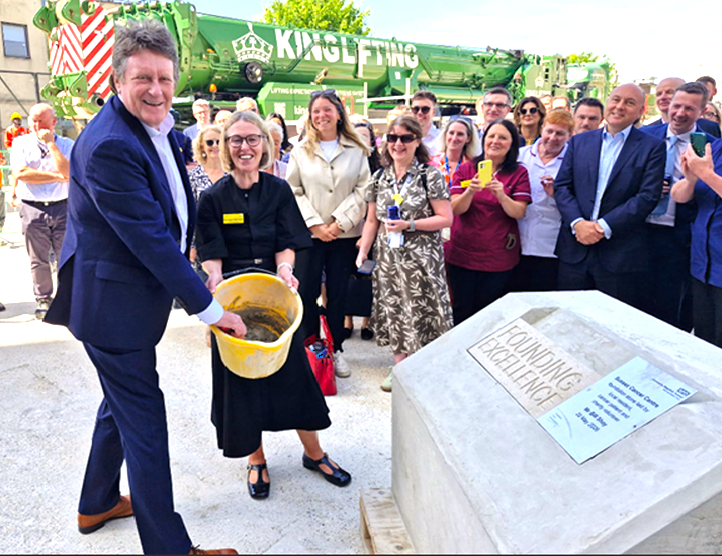
And patients took centre stage for two formal ceremonies – officially opening the helipad at the Royal Sussex County Hospital, in Brighton, and preparing to lay the foundation stone for the new £250 million cancer centre there.
Cancer survivor Bill Shay, 70, from the Kemp Town area of Brighton, said thank you for the treatment that he has received since 2015 and paid tribute to all those working in the outdated cancer centre in Bristol Gate.
The new Sussex Cancer Centre – on the site of the now demolished Barry Building – will have twice as many beds and serve a population of about 1.8 million people.
Consultant oncologist Sarah Westwell, chief of service for the hospital trust’s cancer division, said: “The new Sussex Cancer Centre is a once-in-a-generation opportunity to transform the way we look after people with cancer from across the county.”
Dr Westwell said: “It is so exciting because it is so important for so many people. We know that the environment we have at the moment is not good enough.
“Having this investment will be truly transformational. We will be able to see more patients more quickly, offer a wider range of treatments locally, develop research and new treatments and welcome our patients to a lovely building designed with them in mind. We can barely wait.”
Mr Shay thanked Dr Westwell and her team, saying: “Without them, I and many others would not be here today.”
Andy Heeps, chief executive of University Hospitals Sussex NHS Foundation Trust which runs the Royal Sussex, said that both milestones were about laying the foundations for excellent care everywhere.
Dr Heeps said: “The two important milestones we’re marking today literally couldn’t be further apart: one is below ground and the other is the highest point of any of our hospitals.
“What connects them though is they are both at the heart of our mission to provide all our patients with excellent care – and do so on a scale that only a trust of our size can manage.
“The emergency helipad is a key piece of infrastructure that underpins our status as the region’s major trauma centre.
“And the new Sussex Cancer Centre will provide genuinely transformative care for one of the largest patient populations in the country.”
The first patient to arrive by helicopter on the new helipad – rather than in nearby East Brighton Park – was flown in eight weeks ago after a heart attack while walking on the South Downs in rural West Sussex.
David White, 51, from Southampton, returned today to cut the ribbon at the official opening of the helideck before saying an emotional thank you to those who helped to save his life.
In the first instance, his walking companions spent 33 minutes consistently doing heart-lung compressions to resuscitate him after he collapsed in mid-March.
Mr White, who was unconscious, then flew in a Kent, Surrey and Sussex Air Ambulance to the helideck before being taken to a resus bay in the Royal Sussex A&E (accident and emergency) department.
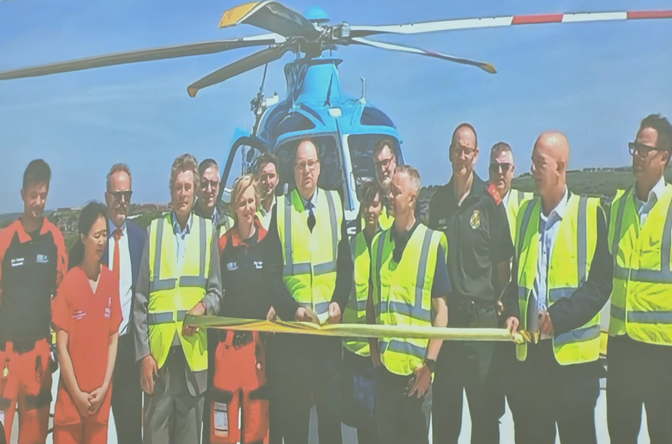
He then spent 10 days recovering in hospital but today Mr White, who works in insurance, said that he had already been able to go back out walking.
Stephanie Tilston, clinical director of the Major Trauma Centre at the trust, said: “Patients like David gain, on average, a precious 11 minutes by being flown directly on to the helipad, rather than needing an additional ambulance transfer.”
Dr Tilston said: “When people are seriously injured or seriously ill, every second counts.
“Bringing the helipad into operation means that we no longer have to land a helicopter in a field, get the patient into an ambulance and then drive them into A&E.
“Instead, we can land them directly on to the hospital and transfer them quickly to whichever specialist team they need.
“Saving time can save lives or make the difference between someone making a full recovery or losing their independence.
“We are so delighted that this helipad is now operational. It is hugely important for the most vulnerable, fragile patients we see.”